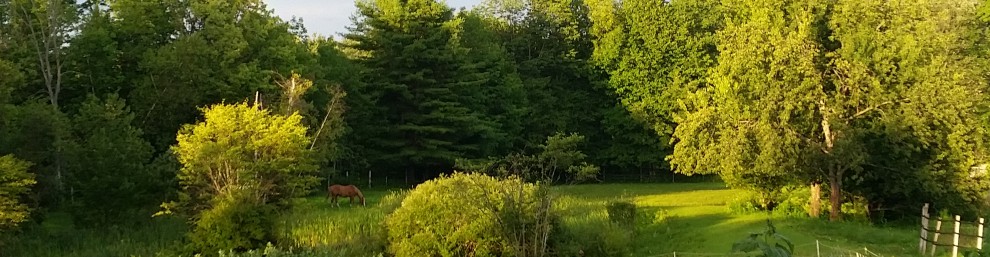

Dirigo Farm hens roam in grassy pasture except when snow covers the ground, nibbling garden leftovers, appropriate table scraps (strong foods affect the taste of the eggs!) and high quality grain. Summer grass provides chlorophyll which produces eggs with rich, golden-colored yolks. In return the hens fertilize our fields as they’re moved to fresh grass every few weeks and entertain us with their antics.
Electric netting provides protection from predators, and nights and bad weather days the hens are secure in a mobile Coop.
Eggs are dry or wet-washed if necessary (water removes a natural protective coating) and refrigerated. They vary in color and size, and lacking a rooster at present, won’t be fertilized.
Our current laying flock includes a variety of hens, including Americaunas, which lay blue-green eggs and are darn hard to fence IN. It makes breakfast exciting! Also some lighter weight (less feed!) varieties that still lay large eggs — Welsummers, Anconas, White Leghorns, Buff Orpingtons and Light Brown Leghorns.
Fun Chicken Facts:
- Chickens with white ear lobes lay white eggs; those with red ear lobes lay eggs that are brown.
- The yellow egg yolk comes from Xanthophyll in the chicken’s skin and beak, which ‘bleach out’ as they lay more eggs…returning to the hen when she molts and rests from laying. This is one way to measure hen productivity.
- It takes a hen 24-26 hours to lay an egg.
- If there’s no rooster in a flock of hens, one hen will stop laying eggs and crow, acting as the protector.
- Chickens can’t swallow while they are upside down.
- A Chicken’s comb keeps the chicken cool and comes in 8 varieties
- Chickens have 24 distinct cries to communicate, including alarm calls that distinguish type of predator.
- Worldwide, chickens outnumber humans.
- Chickens are the closest living relative to Tyrannosaurus Rex.
 Dirigo Farm